
%201.svg)


Find the payment cost issues hiding inside your existing stack
Swipesum Audit helps high-volume merchants, enterprise teams, ownership groups, and multi-location businesses analyze statement line items, benchmark processor pricing, uncover cost leaks, support negotiations, and verify savings across the payment systems they already use.




























.svg)






%201.avif)

















%201.avif)























Clear deliverables your finance, procurement, and payments teams can use
Swipesum Audit turns processor statements into structured findings that help teams understand fees, identify issues, support negotiations, and verify results over time.
Executive savings summary
A clear view of estimated monthly and annual savings opportunities, key findings, and recommended next steps.
Full fee-category breakdown
Breakdown of interchange, network fees, markup, gateway fees, chargebacks, downgrades, and recurring charges.
Line-item audit findings
Specific statement lines that are clean, expected, unusual, non-contracted, or worth challenging.
Processor pricing benchmark
A comparison of current pricing against expected pricing, contract terms, and relevant alternatives.
Contract and pricing review
A review of fee terms, pass-through treatment, processor markup, negotiated pricing, and inconsistencies.
Portfolio summary
Portfolio-level visibility into accounts, processors, priorities, optimization opportunities, and cost-saving initiatives.
Negotiation strategy
Identify and eliminate unnecessary fees while improving performance.
Implementation checklist
Steps, owners, vendor dependencies, and timing for getting approved savings live.
Savings verification report
A follow-up review confirming whether improvements appear on future statements.
Audit one company or an entire portfolio
Swipesum Audit organizes payment data across companies, compares fee categories, identifies outliers, prioritizes opportunities, and gives ownership teams a clearer view of where action can create the most impact.
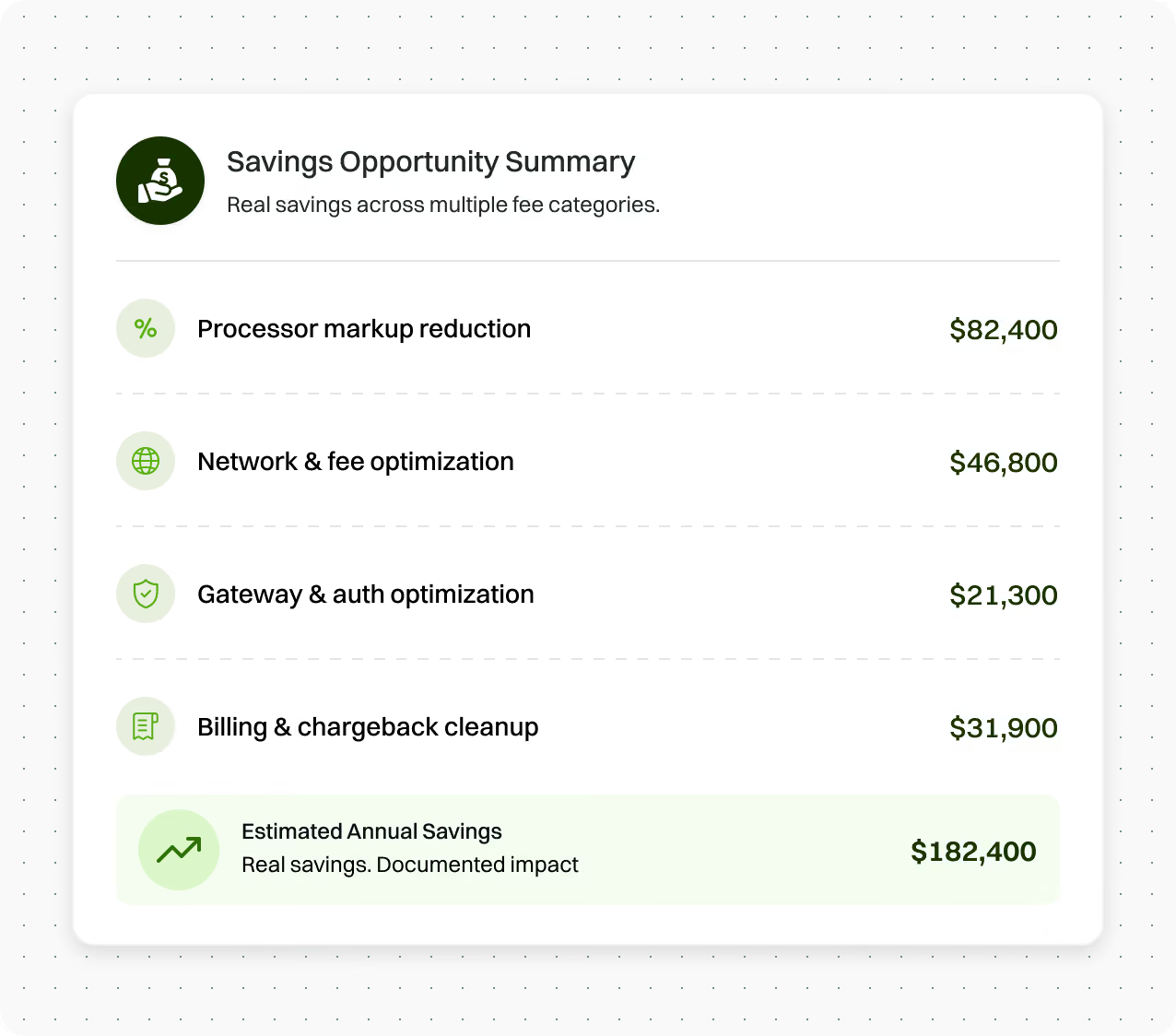
Savings can come from more than lower rates
The best cost savings projects look at the full payment environment: pricing, fees, downgrades, contracts, gateway costs, billing behavior, and ongoing verification.
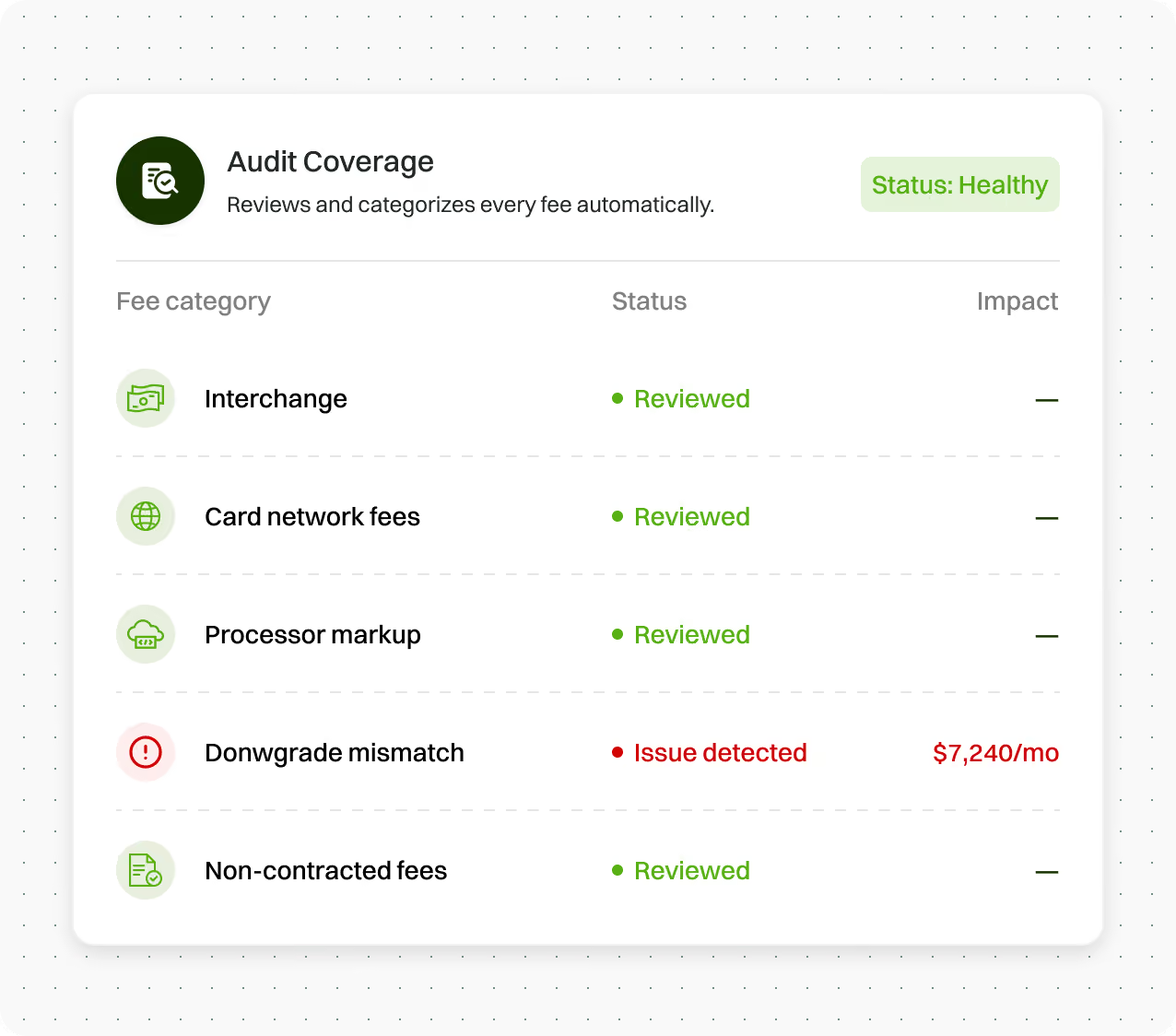
Sometimes the biggest savings come from one small issue
A company may already have a payment director, negotiated pricing, and a strong processor relationship. That does not mean every card type, network fee, downgrade, gateway charge, or statement line is behaving correctly. Swipesum looks for the narrow issues that can hide inside otherwise clean payment programs.
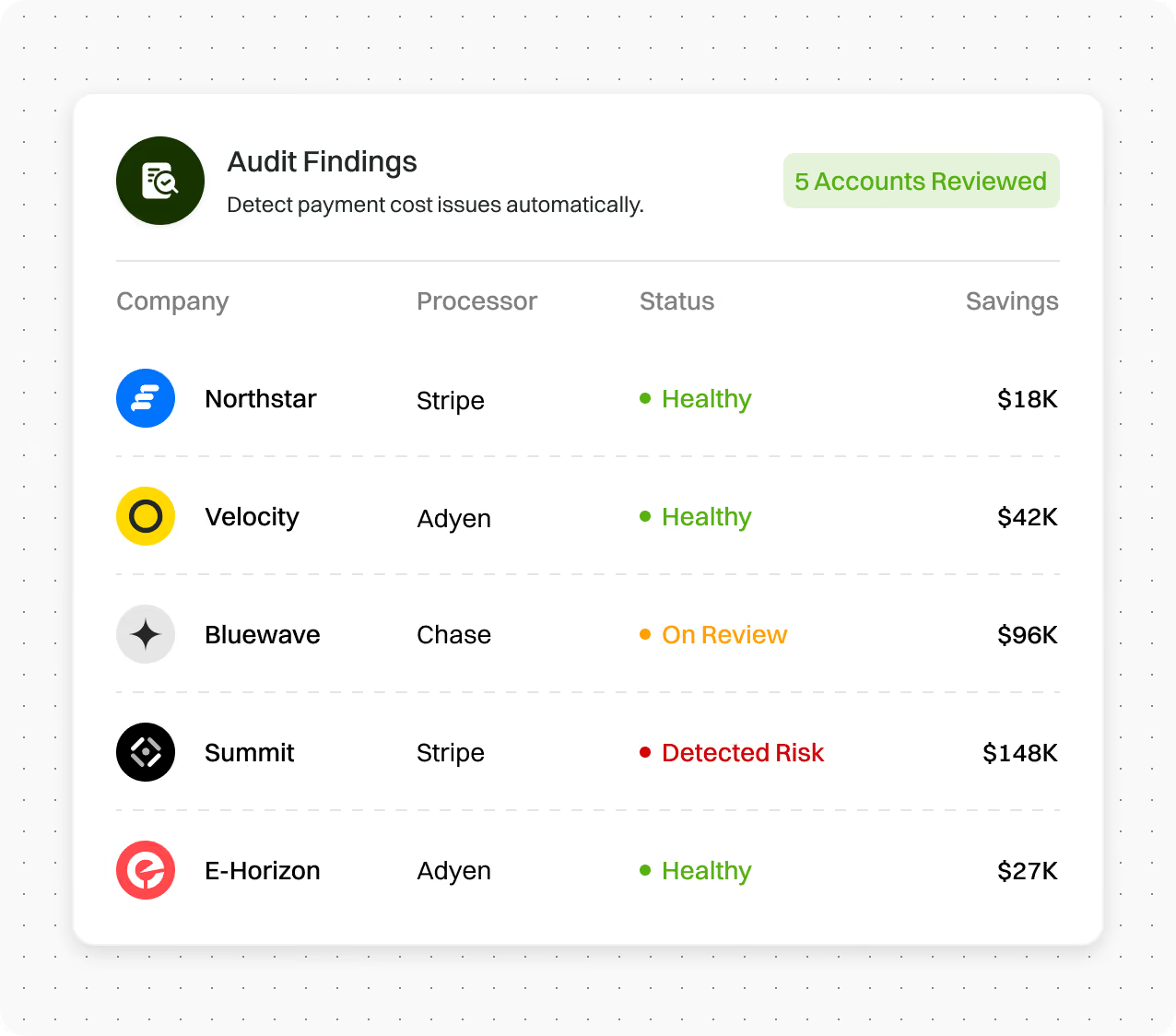
Savings does not always require a processor switch
Swipesum Audit can identify pricing, fee, downgrade, gateway, and billing issues inside your existing setup before a provider change is considered.


Built for companies where payments are already complex
Swipesum Audit analyzes costs, contracts, statement formats, providers, business units, and payment workflows to surface issues inside complex payment environments.

Public companies and enterprise merchants
For enterprise, mid-market, SaaS, e-commerce, and multi-location companies that want lower payment costs but may not want to replace Stripe, Worldpay, Fiserv, Adyen, Chase, or another existing provider.

Private equity and ownership groups
For groups that need to audit and optimize payment costs across multiple companies, brands, or business units.

Established processor relationships
For teams using Stripe, Worldpay, Fiserv, Adyen, Chase, or another provider that want better economics without unnecessary disruption.

Multi-location and multi-brand businesses
For organizations with multiple statements, locations, payment setups, processors, or business units.
What we review in your processing costs
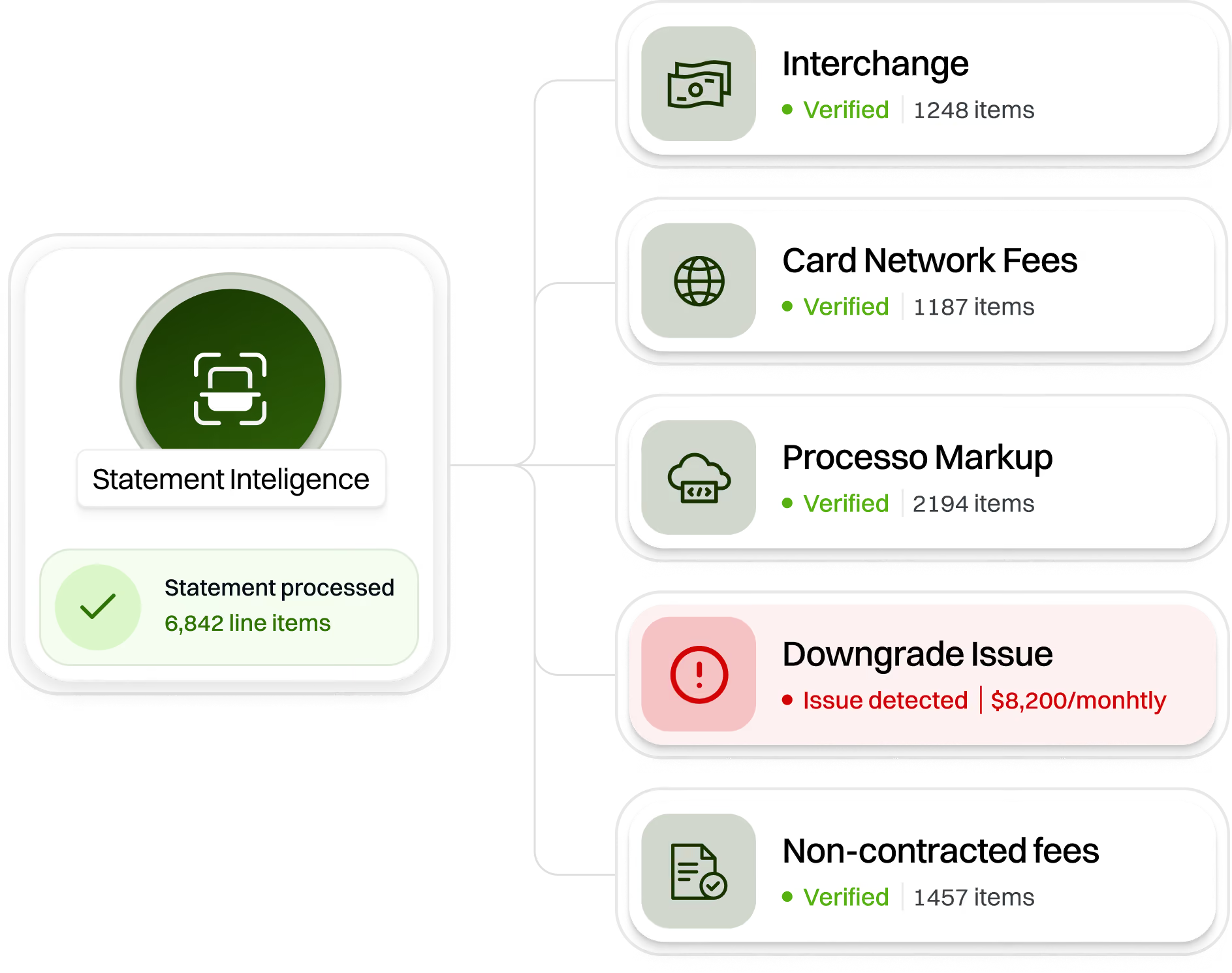
Swipesum reviews interchange, network charges, processor markup, gateway costs, and account fees to identify issues worth investigating and opportunities to reduce costs.
Interchange
Card-brand and issuer costs tied to transaction type, card mix, qualification, and acceptance environment.
Card network fees
Network and assessment charges that may vary by card type, transaction type, region, and routing.
Processor markup
Provider margin layered on top of base payment costs, including discount rates, per-transaction charges, and markup structures.
Non-contracted fees
Fees that do not match expected pricing, contract terms, or negotiated economics.
Effective rate drift
Changes in blended cost over time that can hide pricing increases, mix changes, or fee issues.
Downgrade issues
Card types, transaction types, or qualification issues that create higher costs than expected.
Chargeback and dispute costs
Chargeback, retrieval, representment, and dispute-related costs that may compound across volume.
Gateway and authorization fees
Gateway, authorization, AVS, tokenization, batch, and transaction-related fees.
Monthly, PCI, and account fees
Recurring account-level fees, minimums, PCI charges, reporting fees, and other recurring line items.
Built from real payment projects
Swipesum's solutions come from hands-on work across audits, processor evaluations, platform payment programs, multi-location rollouts, merchant account setups, and ongoing payment operations.






Upload your statement and see what you’re paying
Get a detailed audit of your processing costs and uncover opportunities to reduce fees.

Drag & drop files here, or click to select files
Supported file types: pdf, doc, docx, txt
Request a Statement Audit
FAQ
No. Swipesum often starts by reviewing the current processor setup, pricing structure, contract terms, fee categories, and statement behavior. If savings can be captured inside the current environment, Swipesum will identify that path before recommending a disruptive change.
Yes. Swipesum can review Stripe processing costs and pricing as part of a payment audit. The recommendation depends on your transaction mix, integrations, and commercial terms, rather than assuming you need to switch.
Yes. Swipesum reviews existing payment arrangements across providers. The work starts with your statements, contracts, systems, and business requirements so recommendations reflect your actual setup.
Start with recent merchant processing statements and a description of how your business accepts payments. Contracts, pricing schedules, and gateway or software invoices may be needed for a more complete review.
Yes. Swipesum can organize statements and findings across locations, brands, and merchant accounts. That allows teams to compare costs, identify outliers, and prioritize follow-up instead of reviewing each account in isolation.
Yes. Portfolio audits can compare payment costs and issues across companies while accounting for differences in business model, card mix, and existing systems. The scope and data access are agreed with the ownership team.
No. Effective rate is a starting point, not the whole audit. Swipesum also reviews fee categories, processor markup, interchange qualification, gateway costs, recurring charges, and whether billed pricing matches the agreed terms.
The review goes beyond summary rates to individual statement lines and fee categories. Unclear charges, missing data, and differences from the contract are flagged for follow-up rather than treated as confirmed savings.
Swipesum reviews later statements to check whether agreed changes were applied. The review separates pricing changes from changes in volume, card mix, or acceptance methods so estimated opportunities are not confused with realized savings.
Swipesum starts with your requirements and current payment setup, not a requirement to move to one processor. Recommendations may involve improving the existing arrangement or evaluating a different provider when the business case supports it.