
%201.svg)


Run a better payments RFP. Build a smarter payment strategy
Swipesum runs enterprise payment RFPs, evaluates processors, gateways, merchant accounts, contracts, pricing models, integrations, and implementation paths, then helps carry the decision through launch and ongoing operations.
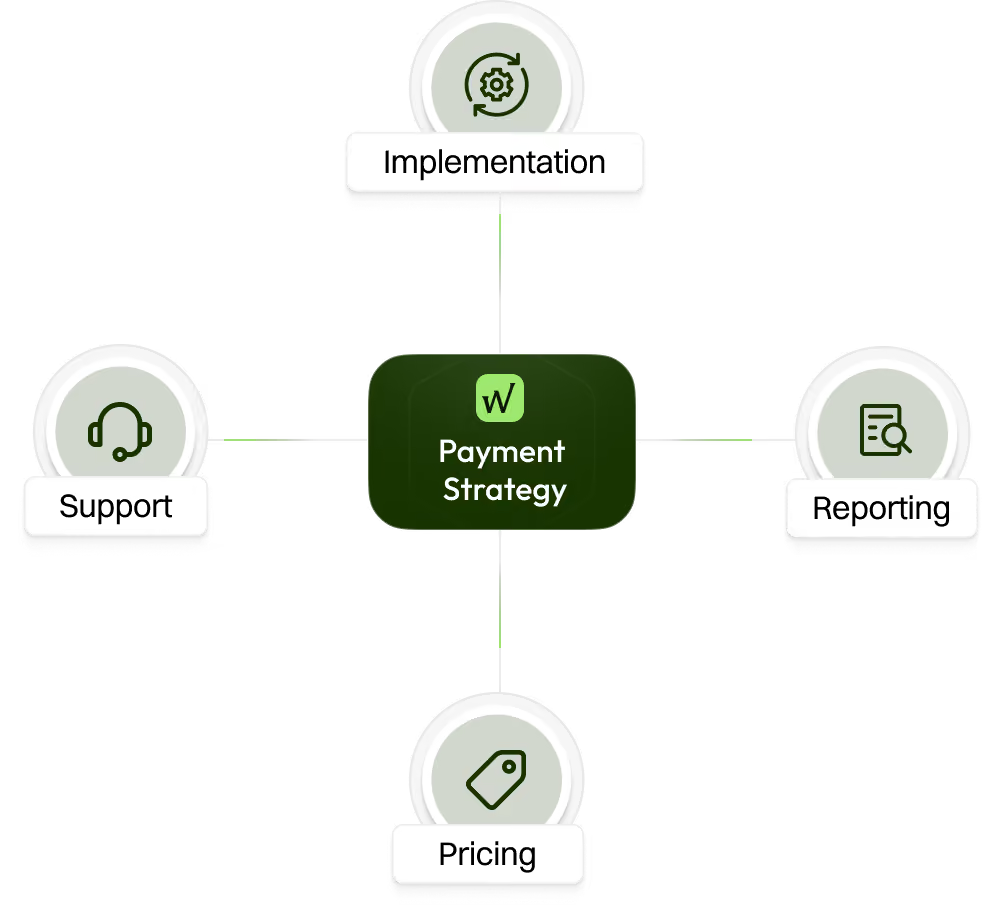

















When payment decisions become too important to leave to a processor
Swipesum helps when payment decisions affect cost, customer experience, reporting, implementation risk, platform revenue, or long-term operations.

Running a payments RFP
Build the requirements, compare providers, score responses, and choose a payment solution Swipesum can help implement and operate after the decision is made.
Requirements, provider fit, commercial terms, technical dependencies, implementation risk, and decision criteria.

Responding to an RFP
You need Swipesum to act as the payments partner inside a broader RFP response.
Payment scope, technical commitments, pricing assumptions, provider dependencies, implementation feasibility, and delivery risk.

Evaluating processors and gateways
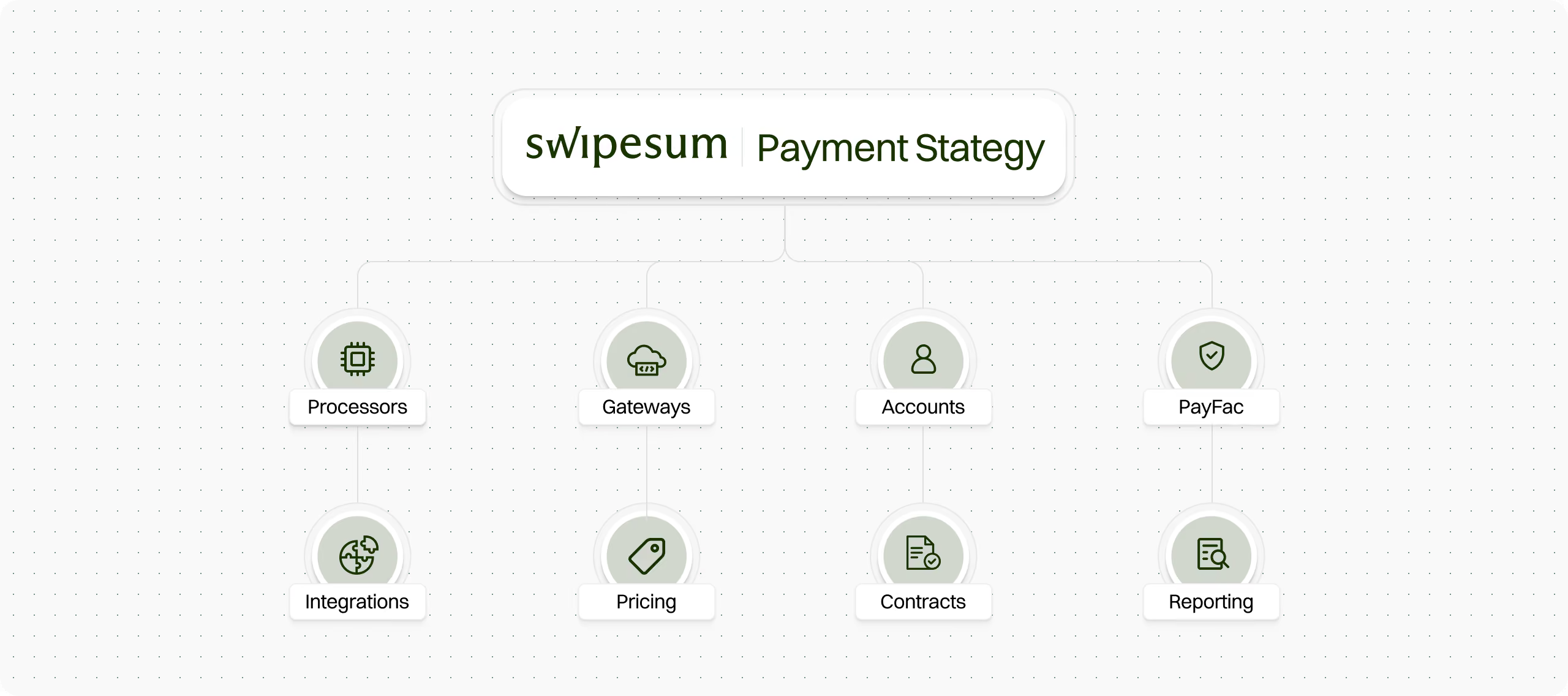
You need an independent view of pricing, fit, support, reporting, integrations, and implementation complexity.
Pricing, gateway and processor fit, integrations, support model, reporting, contract terms, and implementation complexity.
Payment strategy tied directly to implementation and managed payment operations.
Swipesum connects the decision to provider onboarding, gateway and merchant-account setup, integration, go-live, reporting, and ongoing payment operations.
.avif)
Payment strategy, not general business consulting.
Swipesum focuses on the payment decisions that affect cost, infrastructure, customer experience, reporting, revenue, and operations.

Processor-led vs Swipesum-led
Processor-led evaluations center on one provider’s offer. Swipesum evaluates the full stack across economics, technology, implementation, support, reporting, and long-term control.
| Comparison category |  Processor-led processWhat you typically get from a processor Processor-led processWhat you typically get from a processor |  Swipesum-led payment strategyThe full payment picture Swipesum-led payment strategyThe full payment picture |
|---|---|---|
 Pricing Pricing | Headline rates, narrow assumptionsLimited visibility into long-term cost. | Full economic modelFee categories, markup, pass-through treatment, contract terms, and total cost of acceptance. |
     Fit Fit | Recommendations based on what the provider sellsFocused on provider priorities. | Evaluation based on your businessModel, systems, volume, customer experience, and operational needs. |
 Implementation Implementation | Sales handoff after signatureImplementation is your responsibility. | End-to-end implementation supportMigration plan, dependencies, testing, rollout support, vendor coordination, and post-launch verification. |
 Reporting Reporting | Provider-specific dashboardsFragmented data and limited visibility. | Unified visibility across your ecosystemAcross processors, gateways, accounts, locations, statements, and operating workflows. |
 Long-term control Long-term control | A contract decisionNo ongoing strategy or operational model. | An ongoing payment operating modelContinuous optimization, governance, and long-term cost control. |
A payments decision is more than rates.
Swipesum evaluates commercial, technical, operational, and strategic fit so the payment decision works in the real business environment.

Commercial fit
Pricing model, interchange treatment, processor markup, pass-through fees, reserves, minimums, contract length, termination terms, and total cost of acceptance.

Technical fit
Gateway compatibility, POS compatibility, e-commerce integration, ERP or accounting connections, APIs, tokenization, data portability, and reporting exports.

Operational fit
Merchant onboarding, support model, escalation paths, settlement and funding, chargeback handling, reconciliation, hardware deployment, and internal ownership.

Strategic fit
Processor fit, merchant account structure, PayFac model, platform monetization, multi-location scalability, international needs, long-term governance, and future optimization.
Match your business type to the right Swipesum path
Every business accepts payments differently. Use this as a quick guide to see which products and support layers usually apply.
Clear decisions, not just recommendations
Swipesum turns payment strategy into artifacts that help teams compare options, make decisions, negotiate better terms, and launch with more confidence.
Payment strategy brief
A clear summary of the recommended payment approach, business requirements, provider options, and strategic tradeoffs.
RFP requirements package
Requirements, vendor questions, response criteria, and evaluation structure for a payment provider search.
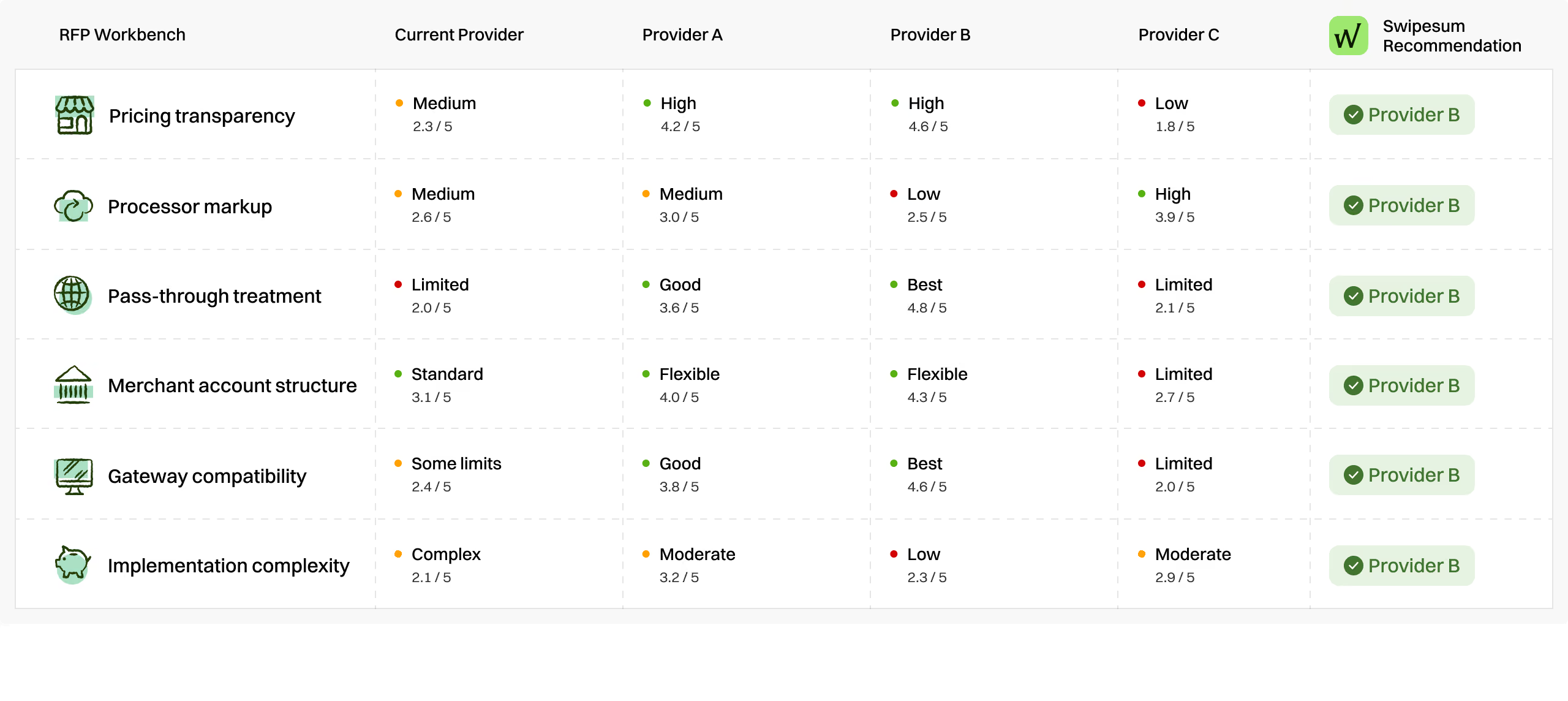
Vendor scorecard
Side-by-side comparison of providers, pricing, implementation needs, support, reporting, and fit.
Commercial comparison model
A structured view of current cost, proposed cost, processor economics, and total cost of acceptance.
Processor and gateway recommendation
A recommendation that explains the best fit based on pricing, systems, business model, support, and implementation path.
Merchant account recommendation
A recommendation for merchant account structure, provider fit, pricing approach, and operational support.
Negotiation plan
A clear view of terms to challenge, improve, protect, or clarify before signing.
Implementation roadmap
A launch plan with workstreams, owners, dependencies, risks, testing, rollout, and timeline.
Migration risk plan
A focused view of operational, technical, reporting, funding, and customer-experience risks.
Built from real enterprise payment projects
Swipesum's RFP and strategy work comes from real payment decisions involving processors, gateways, merchant accounts, integrations, pricing, reporting, and implementation.
Caleres: Finding a ~$1.6M modeled opportunity in enterprise retail payments
~$1.6M modeled
Annual cost savings
Case Study

NAPA Auto Tire & Parts: Migrating merchant accounts across 56 retail locations
Annual cost savings
Case Study

Neighborly / ProTradeNet: A provider-agnostic payments team for a multi-brand franchise network
Annual cost savings
Case Study

Strategy connects to the rest of the Swipesum operating model.
RFPs and payment strategy often lead into audits, implementation, platform payments, or long-term managed payment operations.
Cost Savings & Statement Audits
Identify and eliminate unnecessary fees while improving performance.
Managed Payments Operations
Identify and eliminate unnecessary fees while improving performance.
Swipesum Audit Operations
Identify and eliminate unnecessary fees while improving performance.
FAQ
Yes. Swipesum can help create requirements, build the evaluation framework, compare providers, score responses, support negotiations, and guide the decision process.
Yes. If your company is answering an RFP that includes payment requirements, we can help you write the payments sections, pressure test what you are committing to, and check that the economics and technical claims are accurate. We work as part of your team rather than as an outside reviewer.
Yes. We are not captive to a single processor, so we can compare providers on the merits and recommend the one that fits your volume, card mix, and technical requirements. Swipesum also provides payment software, gateway infrastructure, merchant services, and implementation support, so we can carry the decision through onboarding, integration, go-live, and ongoing operations.
Yes. Being provider-agnostic does not mean refusing to take a position. If you want a single recommendation, we will give you one, along with the scoring, the cost modeling, and the trade-offs behind it so you can see exactly why we landed there.
No. Staying with your current provider on renegotiated terms is a legitimate outcome, and it is often faster and less disruptive than migrating. We recommend a switch only when the economics and the technical fit justify the work involved, and we show you the math either way.
Yes. We evaluate providers against the same framework regardless of the name on the contract, covering pricing structure, interchange handling, approval performance, technical fit, and contract terms. That list is not limited to the providers named above.
Yes, and usually together rather than one at a time. The gateway you choose affects which merchant accounts and routing options are open to you, and moving to a PayFac or managed payments model changes both your economics and your compliance obligations. We look at the whole stack so the pieces are chosen to work with each other.
Yes. Strategy work that stops at a recommendation tends not to survive contact with production, so Swipesum stays involved through provider onboarding, gateway and merchant-account setup, technical integration, and go-live. We coordinate with your engineering team and payment providers, then verify the live result against the modeled economics and requirements.
You receive the analysis and the decision record, not just a verbal recommendation. That normally includes the provider comparison and scoring, the cost modeling behind it, and an implementation plan with steps and owners. The exact deliverables are agreed with you as part of the scope before the work starts.
Payments setups drift as your volume, card mix, and product change, so the work does not end at go-live. We keep monitoring cost and performance through our payments software and flag when pricing, routing, or provider fit is no longer the best available. How much ongoing support you get is set by the engagement you choose.