
Best Merchant Services in 2026: Real Costs, Top Providers, and How Businesses Actually Choose

Updated January 2026
If you Google “best merchant services,” you’ll find a lot of pages that technically answer the question… while somehow avoiding the real one:
“What will this actually cost me, and what happens after I sign?”
Because that’s the part that matters.
I’m Michael Seaman, CEO of Swipesum. We help businesses, from small operators all the way up to publicly traded companies, choose and manage merchant services the right way. We see the full spectrum: the good, the bad, and the “how is this legal?” fee structures that show up months after onboarding.
And here’s the uncomfortable truth: most merchants don’t lose money on payments because they picked the “wrong brand.” They lose money because they picked the wrong pricing model, didn’t validate the real cost, and didn’t have someone in their corner after the contract was signed.
This guide is written for the middle of the market, roughly $2M–$10M in annual revenue, because that’s where businesses start to feel the pain of payments complexity, but don’t always have an internal payments leader. If you’re smaller, you can still use this playbook to avoid stepping on landmines. If you’re much larger, you’ll recognize the principles (and probably have a few war stories of your own).
Let’s make this practical.
Top Picks at a Glance (Quick Comparison Table)
| Provider | Best For | Watch-outs |
|---|---|---|
| Recommended Swipesum Support: High Businesses that want the best provider at the best price, managed end-to-end Tap to schedule a consultation | ||
| Elavon Support: Medium | Mid-market businesses that want stability and broad acceptance coverage | |
| Fiserv Support: Medium | Businesses that need scale and a broad ecosystem | |
| Stripe Support: Medium | Fast online setup, developer speed, and early-stage simplicity | |
| Adyen Support: Medium | Global commerce and complex enterprise routing needs | |
| Checkout.com Support: Medium | High-growth digital brands with international needs | |
| Stax Support: Medium | Businesses attracted to subscription-style pricing | |
| Finix Support: Medium | Software-led businesses embedding payments | |
| Forward Support: Medium | Platforms building payments as a product | |
| PayPal Support: Medium | A common checkout method that many customers trust | |
| Chase (Bank) Support: Medium | Conservative buyers who want brand stability | |
| Square Support: Medium | Simple POS needs and quick launches | |
Before We Rank Anything, Let’s Define “Best”
If you’ve ever had a processor pitch you a “great rate,” you already know this: payments is one of the few industries where the price can be “technically true” and still wildly misleading.
So when I say “best merchant services,” I’m not talking about a logo. I’m talking about outcomes.
Best merchant services means:
- Your effective rate is as low as it reasonably can be for your card mix and business model, and you can explain why it’s that number.
- Your provider doesn’t disappear after onboarding. When something breaks, there’s a real path to resolution.
- You’re not getting “surprise” fees in month six that weren’t on the pretty proposal.
- Your setup fits how you actually take payments: in-person, online, recurring, invoices, multiple locations, whatever your business needs.
- Your deposits are reliable, and you’re not stuck guessing why funding looks different week to week.
That’s it. If a provider can deliver those consistently, they’re in the conversation.
Why This Search Term Is So Brutal (And Why Most “Best Of” Lists Don’t Help)
The keyword “best merchant services” sits right in the danger zone: it’s commercial, competitive, and full of merchants who are one bad decision away from an expensive headache.
Google tends to reward pages that do three things well:
- Help the reader choose. Not educate them vaguely... actually help them pick.
- Show credibility. Methodology, transparency, and proof.
- Cover real-world cost. Not just rate talk but total cost, fee categories, and gotchas.
That’s what this guide is built to do.

The 2026 Methodology: How We Evaluate Providers
I’ll keep this straightforward. We evaluate merchant services providers the same way a smart operator would, except we do it every day, across thousands of businesses.
1) Total Cost and Transparency (the “effective rate” reality)
If you only compare “rates,” you’re going to lose. The most expensive deals are often the ones with the nicest marketing.
We care about:
- pricing model (and whether it hides margin)
- downgrades and “qualification” games
- extra platform fees that show up later
- annual increases that somehow feel “unavoidable”
2) Support (the part that decides if you’ll regret this)
Support is the difference between “this is fine” and “why am I awake at 2 a.m. dealing with batch issues?”
And I’ll say something unpopular: most merchants don’t realize they’re buying support until they need it. Then it’s too late.
3) Fit for how you accept money
Even the “best” processor becomes the wrong processor when it doesn’t fit your business workflow. A simple example: if you’re an ERP-heavy business and your processor doesn’t play nicely with your stack, the downstream cost is enormous: reconciliation, reporting, failed orders, refunds, disputes.
4) Funding reliability, underwriting, and chargebacks
We’re not going to center this guide around high-risk industries, but we’re also not going to pretend risk doesn’t exist.
If you’ve ever been hit with a sudden reserve, delayed funding, or a chargeback spike you didn’t see coming, you understand why this matters.
The Three Ways Merchants Get Burned (The Greatest Hits)
I’ve watched the same movie play out too many times, and it always starts with good intentions.
Burn #1: You trusted a salesperson’s incentives to align with yours
Sometimes the person is nice. Sometimes they’re responsive. Sometimes they even think they’re helping you.
But incentives matter. If someone gets paid more when your effective rate is higher, what do you think happens?
You don’t need to assume bad intent. You just need to assume reality.
Burn #2: You get pushed into a pricing model that sounds simple but costs you later
This is where merchants get “murdered,” as you put it, and you’re not wrong.
The usual suspects:
- Tiered pricing that hides what’s really happening
- Dual pricing or surcharging pressure when it doesn’t fit the business
- “Don’t worry, we’ll optimize later” promises that never materialize
If the model makes it harder to understand your statement, it’s usually not designed for your benefit.
Burn #3: Hidden fees show up after you’ve already integrated and moved on with your life
This one is the worst because it feels like betrayal.
Fees that commonly appear later:
- annual “rate review” increases
- extra gateway/platform charges
- compliance fees that are wildly out of proportion
- new line items with vague names that no one can explain
This is exactly why we built statement auditing software. Because once you see this enough times, you either accept it… or you build a better way.
The Providers: Who They’re Best For (And What to Watch Out For)
Let’s talk about the names you’ll actually see when you shop this.
Swipesum (Best for: getting the best provider at the best price for your business)
Swipesum isn’t a single processor you get locked into. We’re a payments technology and services company, and we’re the team you put on your side of the table.
If you’re in that $2M–$10M range, here’s the reality: you’re big enough to be overpaying real money, but you may not have an internal payments leader to manage this like a project.
That’s where we come in.
What we do differently:
- We’re processor-agnostic. We don’t start with a provider, we start with your business.
- We benchmark and negotiate based on your actual needs, not a one-size-fits-all proposal.
- We handle the “after” part: support, audits, integration coordination, and ongoing optimization.
If you want a vendor, you can get one. If you want a partner that keeps you from getting quietly overcharged, that’s what we built.

Elavon (Best for: mid-market stability when configured correctly)
Elavon can be a very solid answer for mid-market companies, or larger companies like Flair Airlines, especially if stability and broad compatibility matter.
The key is “configured correctly.” A strong platform doesn’t guarantee a strong outcome if the deal is set up with the wrong pricing model or loaded with junk fees.
If you pick Elavon, your success depends on how well the deal is structured and who owns your account long-term.
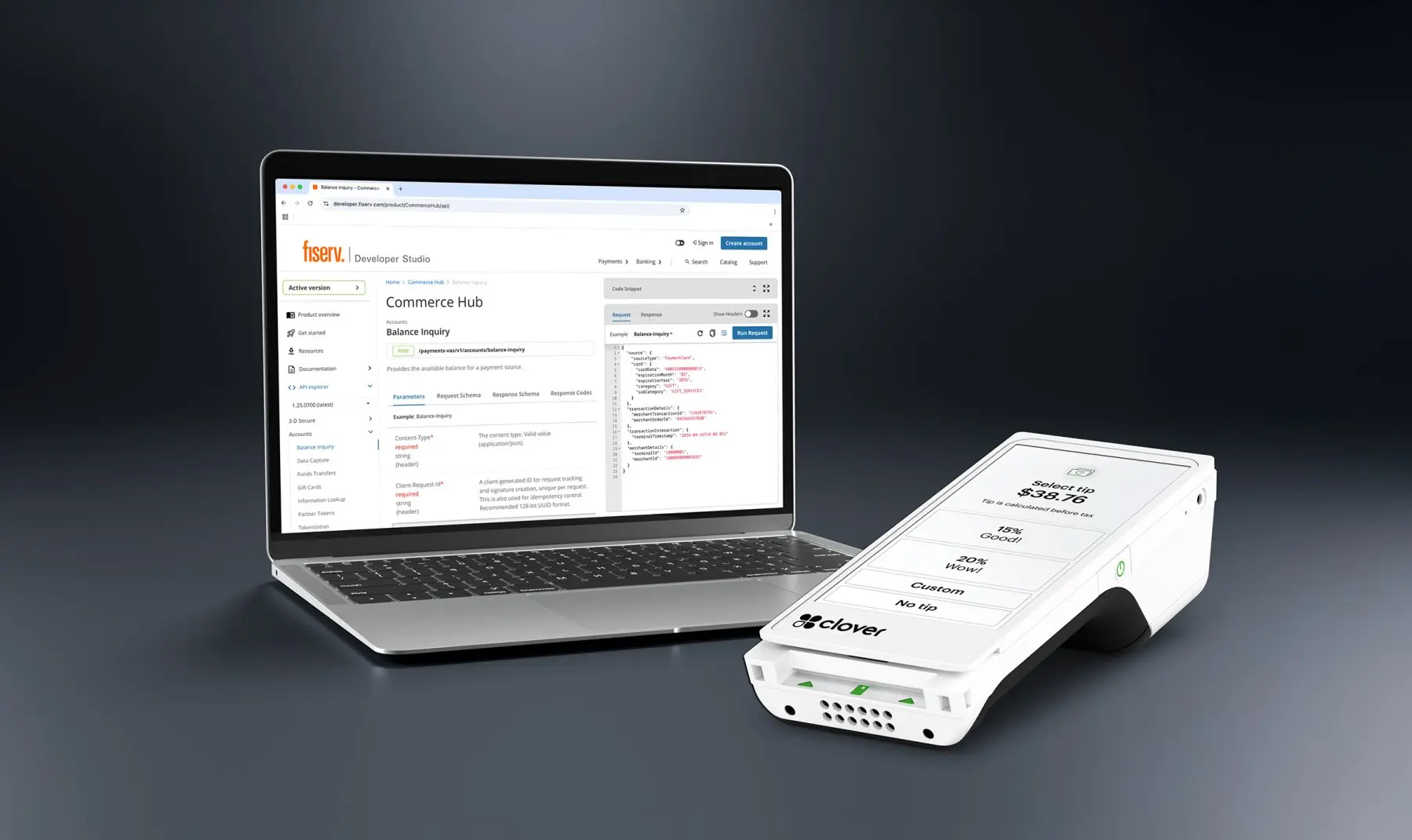
Fiserv (Best for: scale and breadth, but negotiate like it’s your job)
Fiserv is big for a reason. They have a lot of capability and a lot of ecosystem.
But with size comes variability. Pricing can be great or it can be frustrating. Support can be solid or it can feel like a maze.
If you go this route, do not skip:
- benchmarking
- documentation
- clear expectations about ongoing support
Stripe (Best for: online speed and developer-friendly setup)
Stripe is excellent at what it’s built for: speed to launch online.
But Stripe is not always the cheapest long-term answer for a scaling business, especially when add-ons, routing needs, and true effective rate are considered.
If you’re mid-market, Stripe can absolutely be the right fit, just make sure you’re choosing it because it fits your model, not because it was the fastest button to press.
Adyen (Best for: global commerce and complex requirements)
Adyen is often the right conversation when international acceptance and complexity are real.
It can be incredibly powerful, but it can also be operationally heavy. If you don’t have a strong finance/ops function, you can end up with a “great platform” and a messy day-to-day.
Checkout.com (Best for: high-growth digital brands)
Checkout.com shows up frequently for companies scaling across borders. It is also the most powerful Shopify Payments alternative.
If you’re a fast-growing digital brand with international volume, it’s worth evaluating. Just do the same thing you should do with every provider: focus on total cost, not marketing.
Stax (Best for: subscription-style packaging, if the math works)
Subscription-style pricing can be attractive. It can also be misleading if you assume “subscription = cheaper.”
If you evaluate Stax, evaluate the only thing that matters: effective rate plus all-in fees.
Finix and Forward (Best for: platforms embedding payments)
These aren’t “merchant services upgrades.” These are platform infrastructure decisions.
If you’re truly a platform, onboarding merchants, managing payouts, building payments into your product, these can be strong options.
If you’re a typical merchant, they’re probably unnecessary complexity.
PayPal (Best as a payment method, not a full strategy)
PayPal is often a must-have option for consumers. It can increase conversion in certain flows.
But you generally don’t want “PayPal” to be your entire payments strategy. Treat it as an important payment method in a broader stack.
Chase and Square (Best as baselines in the real world)
Chase is a common choice when a business values bank-brand optics. Square is common when a business values simplicity and speed.
Both can be “fine.” Neither is automatically “best” for a scaling mid-market company unless the economics and support fit.
And yes, plenty of businesses start on Square and later graduate to a more optimized setup. That’s normal.
What Mid-Market Companies Do Differently (The Process That Actually Works)
Here’s the process I’d want my friends to follow if they were picking merchant services for a $2M–$10M business.
Step 1: Start with your reality, not a sales pitch.
Gather a few months of statements and map your acceptance methods (POS, ecommerce, invoices, recurring). If you can’t see your current cost structure, you can’t improve it.
Step 2: Compare offers based on effective rate, not a headline.
A “low rate” doesn’t help if it comes with fee creep, downgrades, or a pricing model you can’t audit.
Step 3: Validate support like it’s part of the product (because it is).
Ask what happens when something breaks. Ask who owns escalation. Ask who is responsible after onboarding. If the answer is fuzzy, that’s your answer.
Step 4: Make sure your setup matches how you take money.
The best provider on paper becomes the worst provider when reconciliation becomes a weekly fire drill.
Step 5: Monitor and audit.
The “annual hike rate” problem is real. If you don’t review statements and performance periodically, you’re giving someone permission to raise costs quietly.
This is why payments consulting exists in the first place. Doing it right once is cheaper than switching twice.
Pricing Guidance Without the Hype
I’m not going to throw out a single “perfect rate” because it would be dishonest. Rates depend on card mix, ticket size, and your operating model.
But I will give you a simple truth you can use immediately:
If you can’t explain your statement, you’re not in control of your costs.
When you review your merchant services costs, look for:
- pricing model clarity (can you describe it in one sentence?)
- downgrade patterns (why are certain transactions costing more?)
- fee creep (new line items over time)
- annual increases disguised as “policy updates” or “program adjustments”
If you want to be confident you have the best merchant services for your business, the fastest path is getting your actual statement audited by someone who has seen thousands of them.
Frequently Asked Questions
What are the best merchant services providers in 2026?
The best merchant services provider depends on your business model, your acceptance methods, and your need for ongoing support. In the mid-market, the best choice is usually the one that delivers the lowest all-in effective cost and has reliable support after onboarding.
What is the most common mistake merchants make when choosing a provider?
Choosing based on a headline rate or a brand name, instead of comparing total cost, pricing model risk, and what happens after go-live.
Is interchange-plus always the best pricing model?
It’s often the most transparent starting point, but “best” depends on your business. The real goal is a structure that minimizes your effective rate and keeps fees visible and auditable over time.
Can I negotiate merchant services pricing?
Yes. In many cases, absolutely. The merchants who get the best outcomes benchmark multiple options, understand their statements, and negotiate with leverage and clarity.
How long does switching merchant services take?
It depends on integrations, underwriting, and your stack. Many switches can happen in weeks, but complex environments need a real plan.
Final Word (And What To Do Next)
If you’re reading this because you want “the best merchant services,” here’s my honest take:
The best merchant services is not a brand. It’s an outcome.
It’s what happens when your business gets the right provider, the right economics, the right support, and the right oversight.
If you want, you can do this alone. Many people try. Some do fine. A lot end up switching twice.
Or you can do what real companies do: bring in a payments consulting partner who sits on your side of the table, benchmarks the market, protects you from bad pricing models, and helps you lock in the best merchant services provider for your unique business.
If you’re ready, talk to Swipesum. Bring your current statement, or bring the options you’re considering. We’ll help you get it right, and we’ll stick with you after it’s live.
That’s the difference.