
An Expert’s Guide to Reading Your Payment Processing Statement


As a veteran in the payments industry, with years of experience in sales for one of the largest processors globally, and now as the CEO of Swipesum, I’ve seen firsthand how confusing merchant services statements can be, especially when it comes to credit card processing. The payments industry is complex by design, with varying fees that can change frequently based on the processor chosen, leading many businesses to unknowingly overpay for processing fees. Understanding your credit card processing statement, also known as a merchant services statement, is crucial to avoid hidden charges and ensure you’re getting the best rates possible.
Why Understanding Merchant Services Statements Matters
Merchant services statements are not just a monthly inconvenience—they hold key insights into the fees you’re being charged. Many business owners overlook these statements, but by doing so, they miss out on opportunities to save money by understanding the fees from their payment processor. Let’s dive into how you can read your merchant services statement and what to watch for to ensure you’re not overpaying.
1. Calculate Your Effective Rate
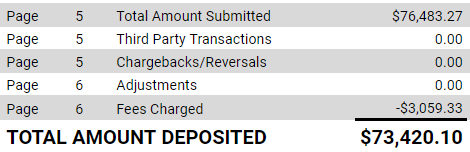
One of the most important figures on your merchant services statement is the effective rate. This percentage represents the total amount of fees charged in relation to your total revenue. Interchange costs, which are fees charged by card issuers for processing transactions, play a significant role in calculating the effective rate. To calculate it, divide the total fees by your total revenue before fees.
For example, if your statement shows total fees of $500 on $12,500 in revenue, your effective rate is 4%. Many business owners discover that their effective rate is much higher than what was quoted by their processor. If your effective rate is unexpectedly high, it’s time to scrutinize your fees.
2. Uncover Hidden Fees in Merchant Services Statements
Interchange Fees: Interchange fees are non-negotiable charges set by card companies and banks. They cover the costs associated with processing transactions, including infrastructure and rewards programs. While these fees are standard, watch out for “interchange padding”—a tactic where processors add extra fees disguised as legitimate charges. If you see round numbers like $5.00 or $19.95, you’ve likely found an unnecessary fee.
Processor Fees: In addition to interchange fees, processors often include their own charges. These might be clearly listed, but they can also be hidden among other costs. Always be on the lookout for fees labeled simply as “fee” or “charge” without a clear explanation. The credit card processor’s fees might be hidden among these costs, making it difficult to determine the processor’s markup. Understanding these fees is crucial to identify potential savings or negotiate better terms with the credit card processor. Markup fees can also be hidden among these costs, and identifying them is essential for understanding the overall cost of payment processing and finding areas for potential negotiation and cost reduction.
3. Identify Obvious and Potential Upcoming Credit Card Processing Fees
Not all fees are hidden. Some are openly listed in your merchant services statement, often in the form of announcements for new or upcoming fees. Processors are required by law to notify you of any new merchant account fees before they are implemented. Pay close attention to the pages of text in your statement, as they often contain critical information about changes to your contract.
If you spot a new fee, contact your processor and ask if it can be waived. Processors are often willing to waive these fees if you catch them early.
Simplify Your Merchant Services Statements with AI Tools Like Swipesum Audit
Reading and analyzing merchant services statements, including understanding credit card processing fees, can be a daunting task, especially when dealing with complex fee structures and hidden charges. Fortunately, advanced AI tools like Swipesum Audit are here to help. Swipesum Audit is designed to take the guesswork out of understanding your statements, allowing you to focus on running your business rather than combing through pages of confusing data.
How Swipesum Audit Works
Swipesum Audit uses AI to automatically scan and analyze your merchant services statements. It analyzes customer transactions as part of its process, identifying all charges, flagging hidden fees, and calculating your effective rate with precision. Here’s how Swipesum Audit can benefit your business:
- Automated Analysis: Swipesum Audit quickly processes your statements, breaking down every fee and charge into easy-to-understand categories. It highlights areas where you might be overpaying, giving you actionable insights without the need for manual calculations.
- Fee Identification and Comparison: The tool compares your current fees against industry benchmarks, helping you see where you’re paying more than necessary. It also checks for interchange padding and other common hidden charges, ensuring you’re only paying what’s fair.
- Effective Rate Calculation: Swipesum Audit automatically calculates your effective rate, so you can instantly see the true cost of your payment processing. This helps you make informed decisions about whether to negotiate with your current processor or switch to a new one.
- Real-Time Reporting: With Swipesum Audit, you can access real-time reports and visualizations of your processing costs. This makes it easier to track changes over time and see the impact of any adjustments you make to your processing setup.
Why Use Swipesum Audit?
By leveraging AI, Swipesum Audit saves you time and money by analyzing your credit card processing statements and merchant processing statement. It eliminates the need for tedious manual reviews, reduces the risk of missing hidden fees, and empowers you to optimize your payment processing strategy. Whether you’re a small business owner or manage a large enterprise, Swipesum Audit provides the tools you need to take control of your merchant services statements.
Get Started with Swipesum Audit Today
If you’re tired of struggling with complicated merchant processing statements, it’s time to give Swipesum Audit a try. This AI-powered tool simplifies the process, allowing you to uncover hidden savings and ensure that your payment processing is as cost-effective as possible. Contact us at Swipesum to learn more about how Swipesum Audit can help your business.
Why You Should Regularly Review Your Merchant Account Statement
Regularly reviewing your merchant statements is essential for identifying and disputing unnecessary charges. Even if you don’t fully understand every detail, these statements provide a clear picture of the fees paid for payment processing. By understanding your merchant services statements, you can take control of your business finances and avoid overpaying.
Get Professional Help with Your Merchant Services Statements
If you find your credit card processing statements too complex to decipher, you’re not alone. At Swipesum, we offer a free service to review your statements, identify hidden fees, and recommend processors who offer better rates. Don’t let confusing statements cost your business—reach out to us for expert help.